
.There is a different kind of understanding that comes not from success, but from stepping away from it. After five years of building Tanthetaa Software Studio, growing it to a team of 500+ developers and delivering across blockchain applications and games at scale, I expected to carry forward lessons about Technology growth, execution, and scale. But what stayed with me most was not the visible success. It was the invisible experiences that made all of it possible.
Many organizations discovered they value work-life balance right up until life insists on using the calendar more aggressively than work prefers.
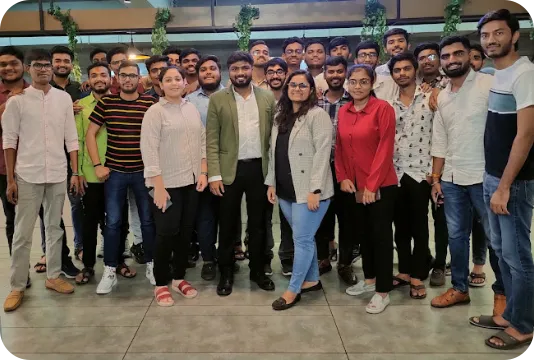
When you are operating as a founder and CTO, your mind is constantly inside systems. You think in terms of architecture, scalability, delivery pipelines, hiring velocity, and execution efficiency. You are trained to remove bottlenecks, optimize flows, and ensure that outputs are predictable. Over time, this mindset becomes second nature. You start believing that if a system is designed well enough, it will perform consistently.
But reality does not behave like that. What I slowly began to notice is that even the most well-designed systems depend on something far less structured — people with moods, and the lives they carry with them. Behind every developer, every manager, every late-night deployment, there is a personal system running in parallel. A family, responsibilities, emotional states, health conditions, and silent negotiations of time and energy.
As a CTO, I optimized for output. I looked at timelines, performance, delivery quality, and team efficiency. And while that is necessary, it also creates a blind spot. You begin to assume that the human layer is stable by default. That people will show up the same way every day. That capacity is constant. But that assumption is quietly held together by something else — care.
Care work does not appear in sprint planning. It is not part of KPIs. It is not tracked in dashboards. But it is everywhere. It is in the parent adjusting their schedule so they can continue working. It is in the partner taking on extra responsibility so the other can focus. It is in the emotional labor that keeps people functional even when things are not easy. This layer is invisible, but it is foundational.
During the pandemic, this became impossible to ignore. The Great Resignation was often framed as a shift in work preferences — people wanting flexibility, better pay, or different roles. But beneath that, there was a deeper signal. The balance between visible work and invisible support had broken. Systems were demanding consistent output, while the underlying support systems were under strain.
From a cultural perspective, this is something we have not fully acknowledged. Modern work culture celebrates productivity, independence, and performance. There is an implicit admiration for people who can “handle everything” and deliver consistently. But very rarely do we ask what is enabling that consistency. What support structures are in place? What trade-offs are being made behind the scenes?
There were also failures along the way that look different in hindsight. Not technical failures, not missed deadlines, but moments where the system felt strained in ways that were not immediately visible. Moments where burnout appeared quietly, where motivation dropped without a clear reason, where performance issues were symptoms of something deeper. At the time, these were treated as operational challenges. Now they feel like signals we did not fully interpret.
Stepping away has changed how I see the role of a builder. It is not just about creating systems that work efficiently. It is about understanding the context in which those systems operate. Especially when moving towards building products for millions of users, the responsibility becomes larger. A product is not just a feature set. It becomes part of someone’s daily rhythm, their attention, their mental space.
This is where the connection to care work becomes important again. Every product either respects the human system it enters, or it extracts from it. It either reduces friction in someone’s life or quietly adds to it. It either aligns with real human constraints or assumes infinite time and energy. These are not just design decisions. They are reflections of what we value.
There is also a deeper ideological shift here. Moving from services to product is not just about scale, it is about intent. Services are about solving defined problems within given constraints. Products are about shaping experiences and behaviors at scale. And if that is the case, then they cannot ignore the invisible systems that support human life.
On a personal level, this phase has brought a sense of grounded gratitude. Not the kind that is spoken casually, but the kind that comes from realizing how much of your journey was supported by factors you did not fully see at the time. The stability, the support, the understanding from people around you — these are not small things. They are the reason systems hold together.
Going forward, the goal is not just to build something bigger, but to build something more aware. Systems that understand the limits of human attention. Products that fit into life instead of overwhelming it. Cultures that recognize that people are not just resources, but participants in multiple overlapping systems.
There is also a deep sense of gratitude I carry for Anandi Sheladiya, who was not just a cofounder and CEO, but someone who grounded the entire journey in reality. Where I was often pushing aggressively — chasing speed, scale, and building without pause — she brought clarity on how business actually works, how decisions carry weight, and how sustainability matters as much as ambition. She helped shape me into a more grounded founder, someone who could look beyond just building and start understanding responsibility. And beyond leadership, there is immense respect for every co-engineer and developer who stood through that intensity — handling my constant push, the long nights, the relentless pace that sometimes stretched for months. There were moments of failure, confusion, and even feeling completely lost, but what stayed consistent was the team’s willingness to show up again, to rebuild, to support, and to keep moving forward together. That kind of resilience is not easy, and it is something I do not take lightly.
Because in the end, the strongest systems are not the ones that push the hardest. They are the ones that sustain themselves without breaking the layers that support them. And those layers, more often than not, are built on care.